
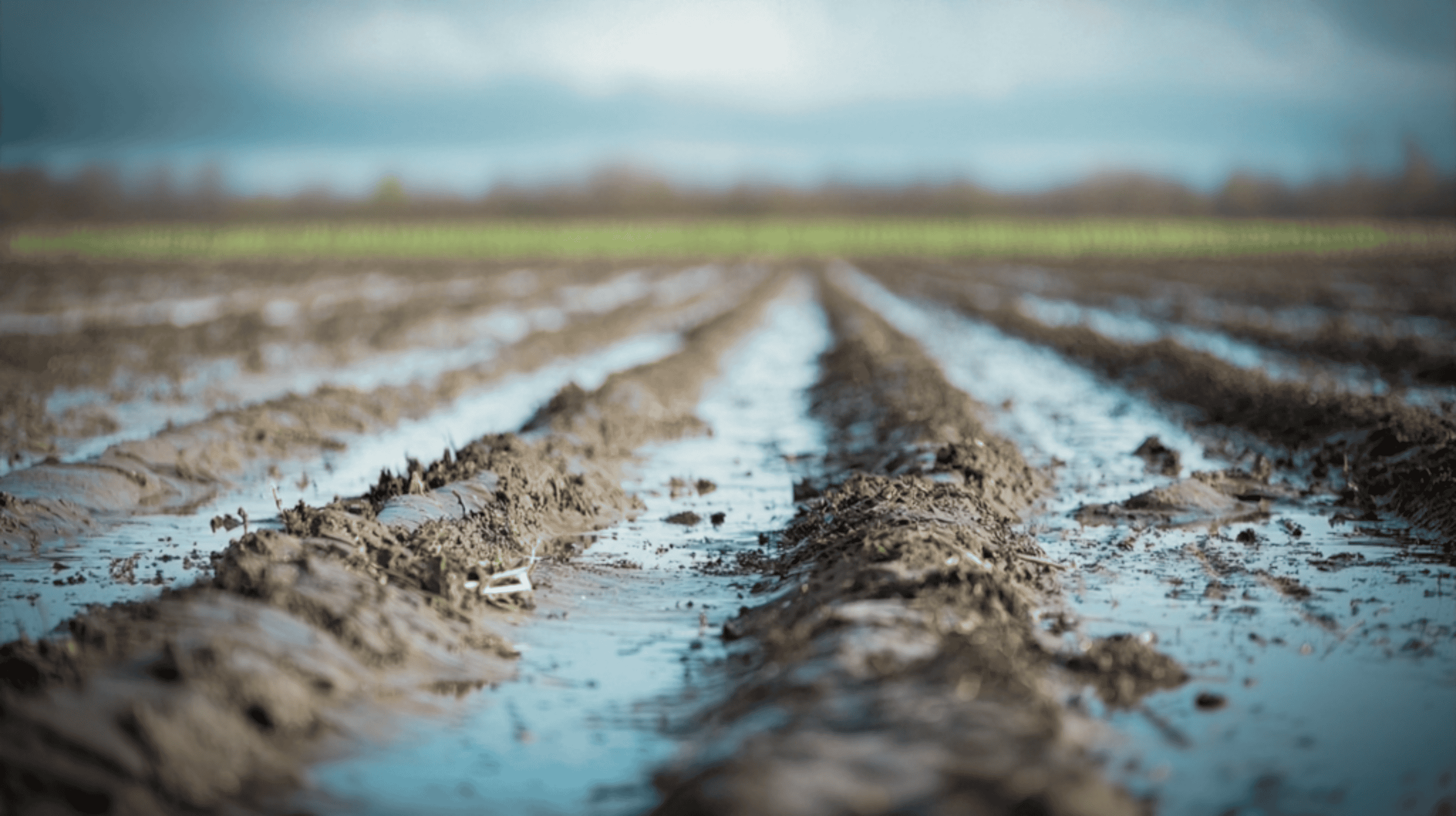
Too Wet to Plant? Northeast Wisconsin Wet Spring Tips for Flooded Fields and Nutrient Loss
Spring is doing what it does best in Wisconsin — keeping everyone guessing.
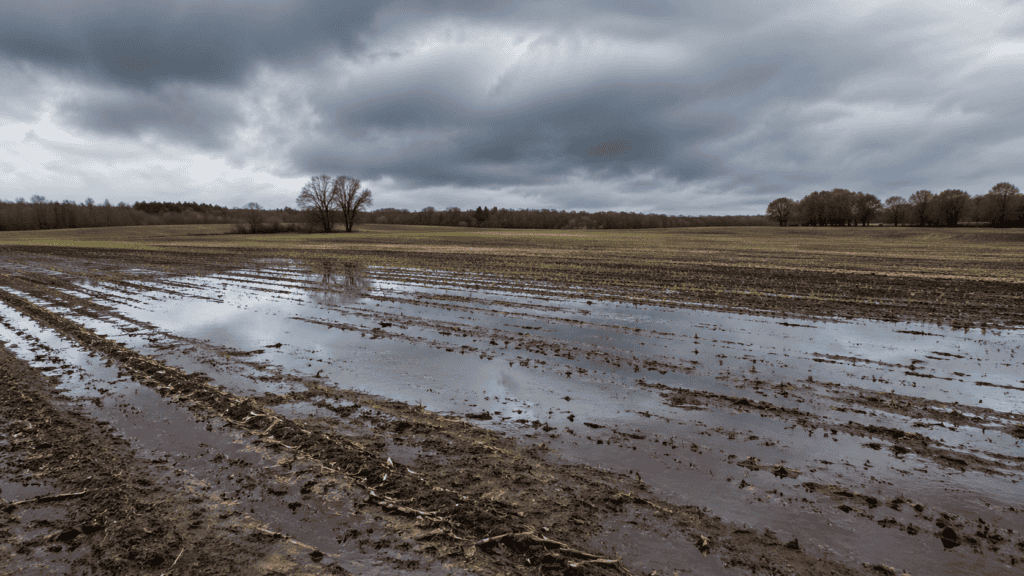
Across Northeast Wisconsin, especially around Shiocton, New London, and the Lower Wolf River, growers are still dealing with saturated soils, ponded low spots, and flood impacts that have tightened every fieldwork window. In a year like no other, the story is bigger than delayed planting. It is also about soil structure, nutrient management, field traffic, and how well those acres recover once conditions finally improve.
That is why this spring is not just about getting seed in the ground. It is about protecting the soil, making better decisions under pressure, and setting fields up to perform once the window opens.
These Northeast Wisconsin wet-spring farming tips can help growers protect soil structure, manage nutrient loss, and make better decisions while fields remain saturated.
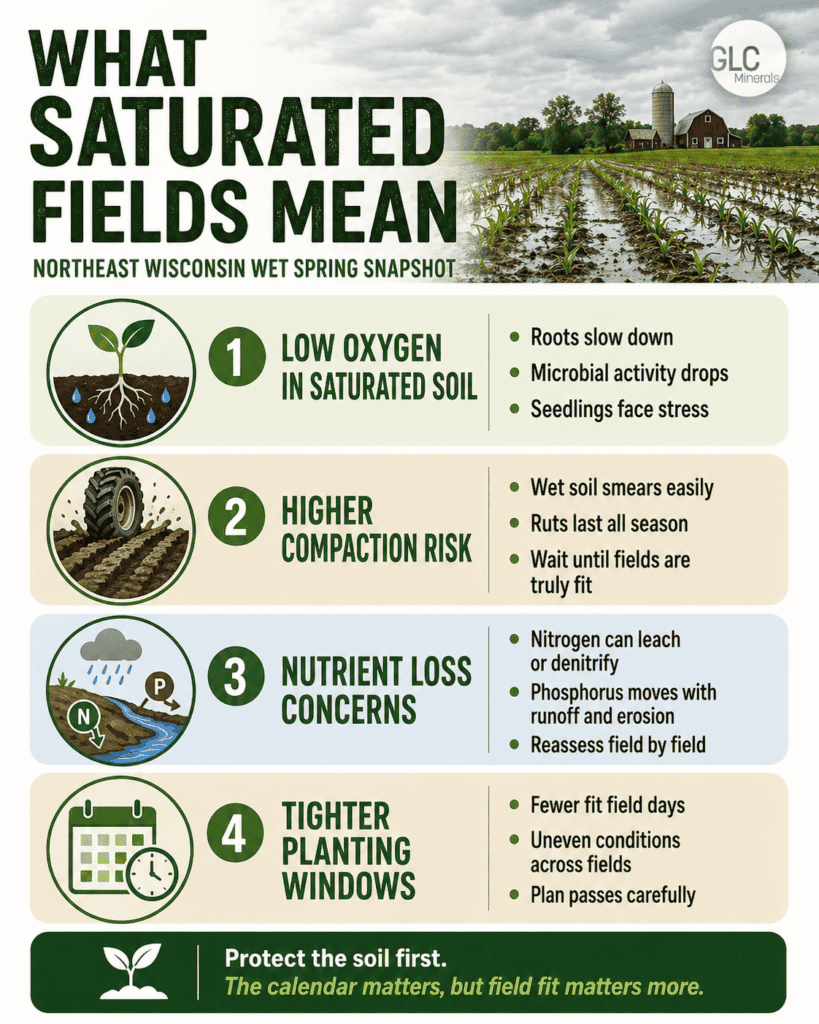
What Saturated Fields Mean for Northeast Wisconsin Planting Season
A wet spring affects much more than the calendar. Soil that is only dry on top can still be unfit below the surface, and that is where some of the biggest mistakes happen.
Wet Soils Lose Oxygen and Slow Early Root Growth
Soil needs air just as much as it needs moisture. Once a field stays wet too long, root development slows, microbial activity drops, and nutrient cycling becomes less efficient. Even before the crop is established, the field can already be working against you.
Compaction Risk Increases When Fields Are Only Dry on Top
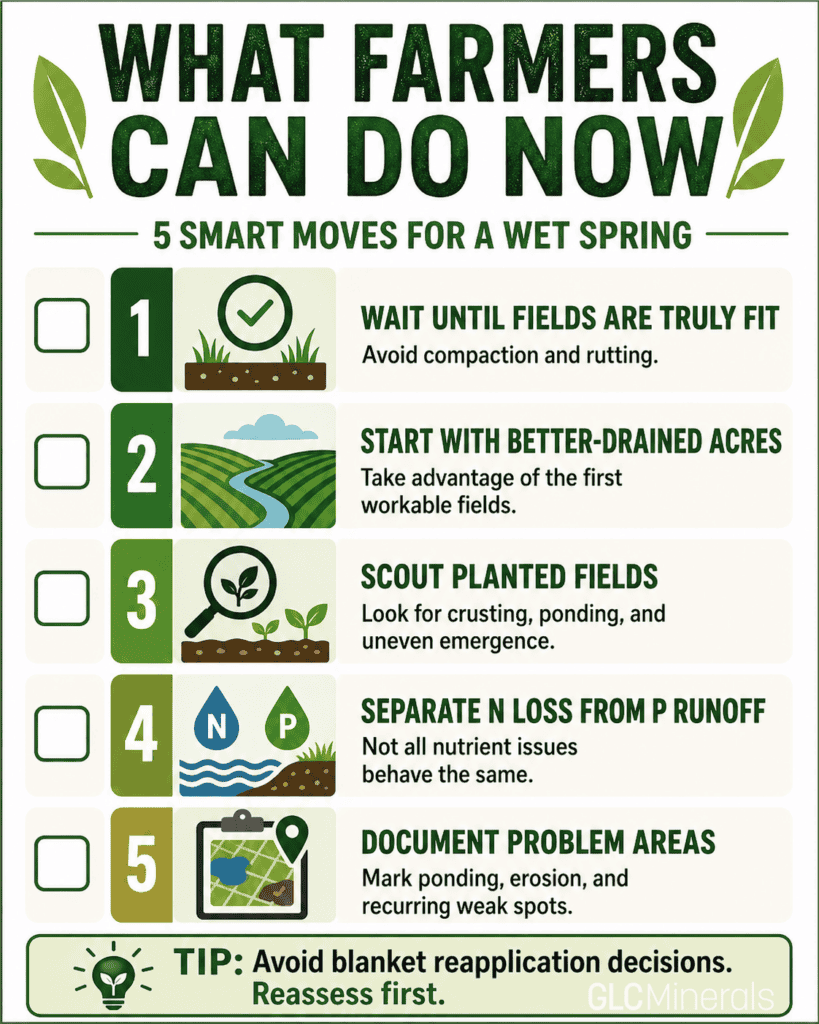
This is one of the biggest risks in a spring like this. A field may look ready from the road, but if it is still tacky underneath, one pass can create sidewall smearing, ruts, and compaction that stick around all season. A late start is frustrating, but long-term compaction is harder to fix than a delayed pass
What Farmers Are Experiencing Across Northeast Wisconsin
The same signs keep showing up in a lot of flooded farm fields right now:
- Wet low spots lingering
- Dry surface, soft subsoil
- Inconsistent field conditions
- Early traffic causing smearing and compaction
- Questions around nutrient loss
For growers who have already planted, this is a year to watch closely. Uneven emergence, crusting, drowned-out spots, and early yellowing do not automatically mean the field is lost, but they do mean the next decision should be based on what is actually happening in the field, not on assumptions.
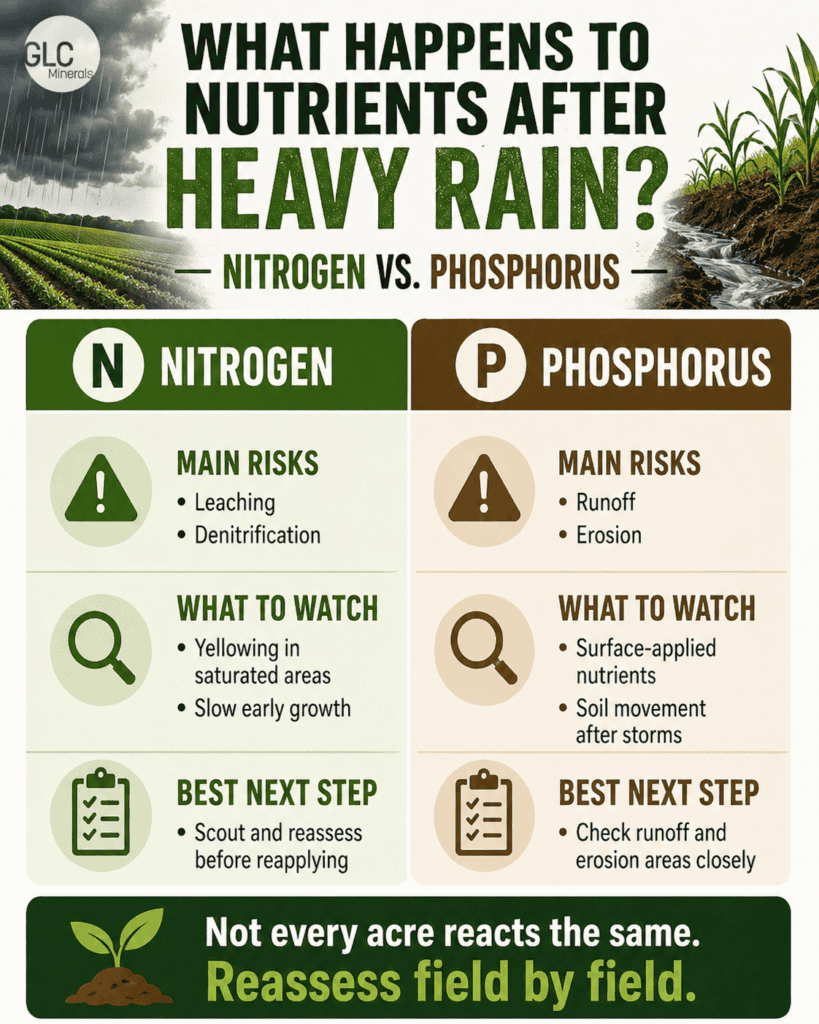
Nitrogen Loss After Flooding and Phosphorus Runoff in Wet Spring Conditions
One of the biggest questions this spring is simple: did I lose nutrients? The answer is maybe — but not evenly, and not every nutrient behaves the same way.
Why Nitrogen Is More Vulnerable in Saturated Soils
Nitrogen levels are usually the biggest immediate concern after prolonged saturation. In wet soils, nitrogen can be lost through leaching and denitrification, especially if water sits on the field for several days and temperatures start to warm. That does not mean every field lost the same amount, but it does mean nitrogen availability may have changed.
Why Phosphorus Loss Often a Runoff and Erosion Issue
Phosphorus is a different conversation. In most cases, phosphorus is more of a surface runoff and erosion issue than a leaching issue. If manure or fertilizer was surface-applied ahead of a heavy rain, that field deserves a closer look. If topsoil moved, phosphorus may have moved with it.
Why Soil Structure Matters After Heavy Rain
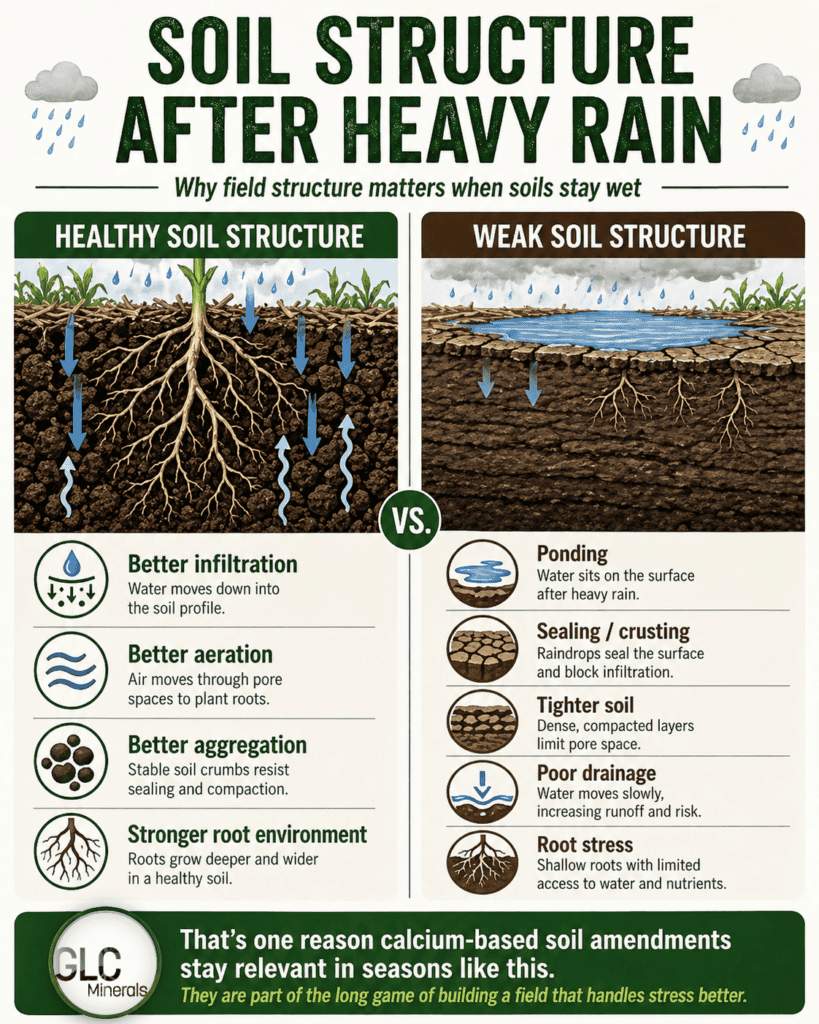
Fields with stronger soil structure generally infiltrate water better, re-aerate faster, resist crusting better, and recover sooner after a wet spell. Fields with weaker structure tend to stay tight, pond longer, and become harder to manage every time weather turns against you.
That is why the real question after a spring like this is not just how soon can I get in. It is what kind of soil system am I building for the next time this happens.
Good soil structure helps support:
- Better infiltration
- Better aeration
- Less crusting
- Improved root environment
- More workable conditions when the weather finally breaks
That is one reason calcium-based soil amendments stay relevant in seasons like this. They are part of the long game of building a field that handles stress better.


How Cover Crops Help Reduce Erosion and Hold Nutrients in Wet Areas
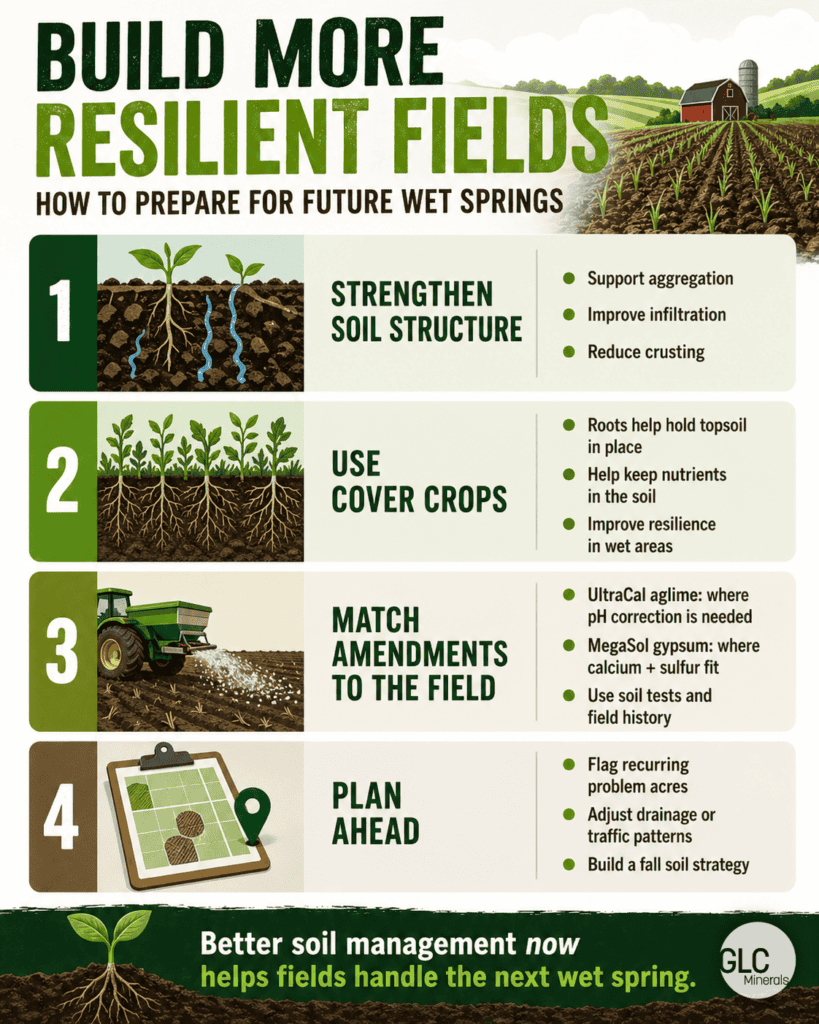
Cover crop roots act like a mesh in the soil profile. They help hold topsoil in place, protect the surface from erosion, and strengthen the areas that tend to wash first. In fields that repeatedly struggle with standing water or runoff, that matters.
Cover crops can also help keep nutrients in the system longer. They support infiltration, reduce soil movement, and can help hold onto nutrients that might otherwise move off the field. In a wet year, that makes them more than a soil health talking point. They become a practical resilience tool for the acres that tend to show problems first.
How GLC Minerals Agronomy Supports Soil Recovery and Long-Term Field Resilience
GLC’s Agronomy solutions are built around soil amendments, soil nutrients, and soil biology, making them a natural fit for conversations about soil recovery, workability, and long-term field resilience.
Where UltraCal® and MegaSol™ Fit in a Wet Spring Soil Amendment Plan
UltraCal® (high‑calcium limestone) and MegaSol™ (natural gypsum) both fit where soil test results and field conditions justify calcium use—but they serve different roles. UltraCal® belongs where pH correction is needed as part of a long‑term soil management strategy. MegaSol™ fits where calcium and sulfur make agronomic sense and where improvements to soil structure, infiltration, and resilience are priorities.
In a wet year, neither product should be viewed as a blanket rescue for every acre. Instead, they work best when used intentionally—based on soil tests, field history, and realistic recovery goals focused on long‑term performance.
Final Takeaway for Northeast Wisconsin Growers
For Northeast Wisconsin growers, this is not just a delayed planting story. It is a field fit, soil structure, nutrient loss, and recovery planning story.
The farms that come out of years like this in the best shape are usually the ones that protect the soil first, reassess before reapplying, avoid forcing field passes, and use a hard season to build a smarter plan for the next one.
GLC Minerals can help growers think through soil amendments, soil nutrients, soil biology, and long-term resilience in a way that is practical, regional, and built to perform.
Need a plan for fields that took on too much water this spring?
GLC Minerals can help you think through soil amendments, nutrient management, and long-term soil resilience so you are not just reacting to this season — you are building for the next one too.
Do not assume everything is gone, but do not assume nothing changed either. Review what was applied, scout the field for ponding or runoff, and separate likely nitrogen loss from phosphorus runoff concerns before deciding whether any recovery action is needed.
Not automatically. Nitrogen is more vulnerable to leaching and denitrification in saturated soils, while phosphorus is more likely to move with runoff and erosion. The best decision is usually field by field, based on saturation time, erosion, stand condition, and yield potential.
Yes. Cover crops help protect the soil surface, improve infiltration, and hold nutrients in the system longer. They are especially useful in recurring trouble spots where erosion or runoff tends to show up first.